 By Vance Neely
Maximizing the output of a home garden requires intentional spatial planning. The arrangement of your crops dictates how efficiently they access sunlight, water, and soil nutrients. Standard single-row garden layouts, while traditional, often waste significant space by prioritizing walking paths over growing areas. To achieve a high-yielding harvest, you must shift your focus toward layouts that maximize plant density while maintaining optimal plant health.
Choosing the right design depends heavily on your available terrain, soil quality, and the specific varieties of vegetables you want to grow. Implementing a strategic layout can significantly reduce weed competition, minimize evaporation, and exponentially increase your overall harvest weight per square foot.
The Block Layout and Intensive Bed Method
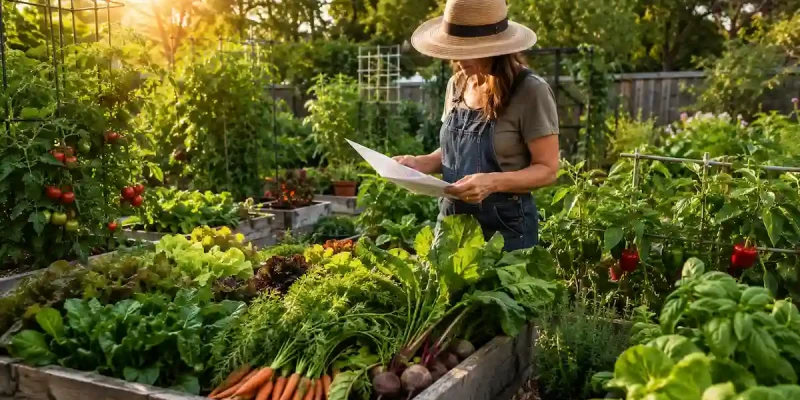
The block layout, often referred to as wide-bed planting, replaces long, single-file rows with wide rectangular growing zones. Instead of planting seeds in a single line, crops are grown in clusters or grids inside beds that typically measure three to four feet wide. The length can be extended based on your yard size, but the width is constrained so you can easily reach the center of the bed from either side without stepping on the soil.
By eliminating the frequent walking paths required between traditional single rows, the block layout opens up massive amounts of soil for actual production.
Why the Block Layout Increases Productivity
-
Creating a Microclimate: As plants grow in a close grid pattern, their leaves touch and form a dense living canopy over the soil. This natural leaf shield blocks sunlight from hitting bare ground, which severely stunts weed growth and prevents soil moisture from evaporating rapidly.
-
Preserving Soil Integrity: Because you never step inside the growing blocks, the soil remains loose, aerated, and uncompacted. Plant roots thrive in loose soil, allowing them to expand deeply and absorb nutrients more efficiently.
-
Efficient Moisture Delivery: Water can be concentrated directly on the growing blocks using soaking hoses or drip irrigation lines, rather than wasting water on empty paths.
When arranging a block layout, you must use equidistant spacing. Instead of following the standard row spacing instructions on seed packets, utilize the recommended in-row plant spacing in all directions. For example, if bush beans require six inches between plants inside a row, plant them six inches apart in every direction throughout the entire block.
The Square Foot Gardening System
A specialized variation of the block layout is the square foot gardening system. This method relies on dividing a raised bed into a distinct grid of square boxes, with each square measuring exactly twelve inches by twelve inches. A physical grid made of wood slats, string, or plastic is placed over the bed to keep the boundaries visible throughout the growing season.
Each individual square foot holds a specific number of plants based on the ultimate size of the mature vegetable. This structure removes guesswork and prevents over-crowding, ensuring every square inch contributes to a high yield.
Spacing Allocations for the Grid System
-
Large Plants: Crops like cabbage, broccoli, peppers, and eggplants require a full square foot per individual plant.
-
Medium-Large Plants: You can plant four head lettuces, Swiss chard, or marigolds per single square foot.
-
Medium-Small Plants: Bush beans and spinach can be planted at a density of nine plants per square foot.
-
Small Plants: Fast-growing root crops like carrots, radishes, and onions can comfortably fit sixteen plants per square foot.
This setup is perfect for continuous harvesting. When you pull up a square of sixteen mature radishes, that specific square is immediately empty and ready to be replenished with compost and replanted with a different crop. This practice keeps your garden operating at maximum production capacity from spring until the final autumn frost.
Vertical Gardening Layouts
To truly maximize your harvest weight in a limited footprint, you must utilize vertical space. Vertical gardening involves training vining or sprawling vegetables to grow upward on trellises, arbors, cages, or stakes, rather than letting them spread horizontally across the ground.
By moving foliage off the damp earth, you open up ground space for low-growing crops while simultaneously protecting your climbing plants from common soil-borne fungal pathogens.
Ideal Materials and Structural Designs
-
A-Frame Trellises: These structures work exceptionally well for heavy vining plants like cucumbers and winter squash. You can plant shade-loving greens, such as spinach or arugula, directly underneath the tent of the A-frame to shield them from high summer heat.
-
Cattle Panel Arbors: Arching a heavy-duty wire cattle panel between two raised beds creates a strong walkway arbor. Pole beans, vining tomatoes, and small pumpkins will climb the arch, allowing the fruits to hang down for effortless harvesting.
-
Single Stake Training: Indeterminate tomato varieties can be pruned to a single main stem and tied to a tall wooden or metal stake. This allows you to plant tomatoes as close as eighteen inches apart, dramatically increasing the number of tomato plants you can fit into a single bed.
Vertical structures must be positioned along the northern or western boundaries of your garden plot. This orientation ensures that as these vertical walls fill with dense green leaves, they do not cast unwanted shadows over smaller, sun-loving crops situated in the rest of the garden.
Four-Square Crop Rotation Layout
A high yield is not just a short-term goal for a single season; it requires maintaining excellent soil health over multiple years. The four-square crop rotation layout is an organizational strategy designed to prevent pest buildups and soil nutrient depletion by systematically shifting plant families to different beds each year.
The layout splits the garden into four equal zones, with each zone hosting a specific group of vegetables categorized by their nutritional demands and plant families.
The Four Rotational Groups
-
Heavy Feeders: This group includes leaf and fruit-producing crops like tomatoes, peppers, broccoli, corn, and squash. They consume massive amounts of nitrogen and phosphorus from the soil.
-
Givers or Legumes: Beans, peas, and cover crops house beneficial bacteria on their root systems that absorb nitrogen from the air and fix it into the soil, replenishing the nutrients extracted by the heavy feeders.
-
Light Feeders: Root vegetables such as carrots, beets, turnips, and parsnips do not require excessive nitrogen. In fact, too much nitrogen causes them to grow lush leaves but tiny roots. They thrive in the soil conditions left behind by legumes.
-
Gourd and Nightshade Balancing: Potatoes, onions, and garlic are rotated into the final zone to ensure that soil-borne diseases specific to the nightshade family do not build up permanently in the soil profile.
Every spring, the crops move clockwise by one zone. Bed one shifts to bed two, bed two moves to bed three, and so on. This cyclical layout naturally breaks pest life cycles and ensures your soil remains fertile enough to support heavy yields year after year.
Key Strategies for Maximizing Layout Output
Regardless of the structural layout you select, integrating specific companion planting and succession planting methodologies will push your yields to their absolute peak.
Companion Planting and Intercropping
Intercropping is the practice of growing two or more different crops in close proximity within the same bed. By matching fast-growing, small plants with slow-growing, large plants, you utilize space that would otherwise sit empty for months.
A classic high-yield intercropping strategy involves planting radishes or leaf lettuce directly between newly transplanted tomato seedlings. The radishes and lettuce will grow rapidly and be harvested completely within four to six weeks. By the time the tomato plants expand and require that extra space, the companion crops are already gone, effectively giving you a bonus harvest from the exact same square footage.
Succession Planting Timelines
To prevent the common garden mistake of having a massive harvest all at once followed by weeks of empty beds, employ succession planting. This involves seeding small batches of crops every ten to fourteen days.
As soon as an early spring crop like peas finishes its production cycle in June, remove the vines entirely, work a fresh layer of compost into the soil, and immediately plant a mid-summer crop like carrots or bush beans for a fall harvest. Keeping the soil continuously occupied ensures your garden layout yields food during three full seasons out of the year.
Frequently Asked Questions
Which garden layout works best for a backyard with sloped terrain?
A terraced raised bed layout is optimal for sloped yards. Building stepped wooden or stone retaining walls along the contours of the hillside creates flat, level growing shelves. This prevents water runoff from washing away topsoil and seeds, ensuring nutrients soak deeply into each bed rather than pooling at the bottom of the slope.
How wide should walking pathways be between intensive garden beds?
Walking pathways should ideally be between eighteen and twenty-four inches wide. This provides enough clearance for you to walk comfortably, kneel, and carry harvest baskets or tools without stepping into the growing zones. If you plan to use a standard wheelbarrow, measure the widest part of your wheelbarrow and add an extra four inches of clearance to determine your path width.
Can I use the square foot gardening grid system in a traditional inground garden plot?
Yes, the grid system can be applied directly to inground soil, provided the soil has been thoroughly amended with organic matter and loosened deeply. You can construct temporary wooden grid frames or use simple outdoor string tied to stakes to map out the twelve-by-twelve-inch squares across your inground garden zones.
What is the best layout orientation for maximum sunlight exposure?
For gardens located in the northern hemisphere, rows and beds should ideally be oriented from north to south. This layout ensures that as the sun moves across the sky from east to west, plants on both sides of the bed receive equal amounts of direct sunlight throughout the day, preventing taller plants from casting continuous shade on shorter neighbors.
How do I incorporate perennial vegetables into a high-yield layout?
Perennial crops like asparagus, rhubarb, and berries, which remain in the ground permanently for years, should be given their own dedicated border beds along the southern or eastern edges of the garden. Placing them in separate perimeter zones ensures their permanent root systems are never disturbed by the seasonal digging, tilling, or replanting required for annual vegetable crops.
Is it possible to use a block layout if I only have a concrete patio?
You can replicate a block layout on concrete by using large fabric grow bags or deep wooden planter boxes arranged closely together. By grouping these container units into a contiguous block formation, you can recreate the dense canopy microclimate that helps conserve water and regulates soil temperatures on hot surfaces.