 By Vance Neely
A sheet of perspex has two prices. The first is on the invoice. The second is what the business keeps paying after installation, in cleaning labor and replacement cycles. Color and finish drive most of that second cost, so for a small business choosing materials for displays or partitions, those two decisions shape the budget more than the sheet price itself.
Why acrylic took over from glass
Acrylic’s material properties differ from those of glass and depend on the grade. Lighter panels need simpler mounting hardware and cheaper fixings. Higher impact resistance lowers the breakage rate in public areas, and breakage is a cost that keeps coming back.
Safety sits behind the impact figures, but the outcome depends on the material, the thickness and the mounting. No grade carries a blanket safety guarantee, so the specification has to match the setting and the load the panel will actually face.
Weight changes the install bill too. A large glass partition can need specialist handling and heavier support framing. The same panel in acrylic is a simpler lift on a lighter frame.
Wood still shows up in fit-outs, mostly as feature panels and trim. It warps with humidity and it needs sealing. Acrylic holds its dimensions and wipes clean.
Polycarbonate enters the comparison at the high-impact end. It beats acrylic on raw impact strength, but it scratches more easily and costs more per sheet. Acrylic holds better surface clarity and takes a cleaner polish. For displays and partitions where appearance matters most, acrylic suits more budgets.
Color does commercial work
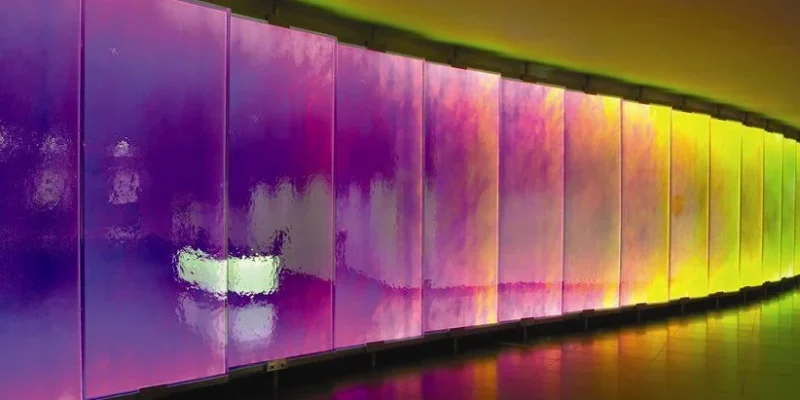
Red reads as urgency, which is why it ends up on sale signage. Cool blues and greens read as calm, so they suit clinics and waiting areas. Hospitality fit-outs run warm ambers and timber tones for comfort.
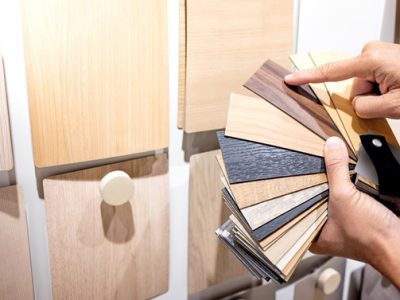
Brand color does a different job. A display stand in the brand’s exact shade ties product to brand before a single word gets read. That is why suppliers offer Pantone color matching: a business with several sites can order the same shade across every fit-out, and the identity stays consistent from one location to the next.
Colored-through sheet carries pigment through the full thickness. The alternative is clear sheet with a vinyl film applied. The film route costs less on day one, but it adds a replacement cycle: film peels at the edges and fades under strong light. A scratch through film shows a different color underneath. A scratch in colored sheet shows the same color.
Short-run promotional displays suit film. For permanent fit-outs, colored-through sheet holds up better over time.
Tint depth also controls light. A light smoke tint softens glare on a window display and keeps most of the daylight. A dense opaque color blocks light entirely, which suits a backing panel but defeats the purpose of a divider.
Color can also direct foot traffic. A run of colored toppers above shelving marks out categories, and a bright counter front pulls shoppers toward the checkout. Retail designers use colored acrylic for this because the same sheet handles both the signage and the structure.
Frosted finishes balance light and privacy
Open-plan offices have a known problem. Everyone can see everyone, and concentration pays for the openness. Full-height solid partitions restore privacy but block the daylight. Frosted acrylic splits the difference.
A satin or frosted finish diffuses the light passing through it. Daylight from perimeter windows reaches deeper into the floor plate, and the partition still blocks direct sightlines. Workstations get visual privacy, and the space keeps its open feel. Panels can also cut the visual distraction of movement across the floor. For noise control, check the acoustic performance of the complete partition.
An open floor can be split into collaboration areas and quiet workstations with panels that unbolt and move when the team changes. A drywall alteration costs far more than relocating a partition, and it takes the area out of use while the work happens.
Frosted also has a maintenance advantage that rarely appears on a quote. The textured surface hides the fingerprints and smudges that show immediately on clear gloss. In a high-traffic corridor, that difference means less cleaning labor every week.
Getting the cut right
A finish only performs if the panel fits. Commercial fit-outs run on tolerances. Partitions slot into aluminum channel, display panels mount to standoffs, and a sheet cut 3mm out of true holds up the whole job.
Gauge is a structural decision as much as a budget one. A partition spanning a wide opening needs the tensile strength of a thicker sheet. Under-specify the gauge and the panel bows in its channel, which turns a saving into an early replacement.
CNC routing and laser cutting handle most acrylic fabrication. Routing cuts precise shapes and repeated geometry across multiple sheets, and it machines the cutouts a fit-out actually needs: fixing holes, cable pass-throughs, ventilation slots and rebates for hardware. That work happens at the machine, not on site with a drill. Laser cutting leaves a polished edge straight off the machine, which suits visible edges on display work and often removes a finishing step.
Cut-to-size ordering changes the waste line as well. Buying standard sheets and trimming on site means paying for offcuts and disposal. Ordering panels cut to exact dimensions can reduce on-site waste and disposal. For an example of cut-to-size supply, see perspex perth when preparing your panel measurements.
Curved work is a separate process. Acrylic softens above its glass transition temperature and can be thermoformed into display cases and curved screens. The sheet chosen has to suit forming, so that decision belongs at the ordering stage.
Gloss and matte serve different floors
Once a panel is cut to size, the finish determines how it performs day to day.
High-gloss for merchandise
High-gloss acrylic earns its price in retail. Under overhead spotlights, a gloss black riser or mirrored base reflects the product and the light back at the shopper. Luxury visual merchandising uses this effect constantly. The surface under the product helps sell it.
Mirror-finish acrylic has a related use in tight spaces. A mirrored panel behind a display doubles the visual depth of a small shop floor, and it weighs far less than mirrored glass doing the same job.
The condition attached to gloss is upkeep. It shows every fingerprint and scuff, and cleaning streaks read clearly under spotlights. Gloss suits low-touch environments: jewelry counters, cosmetics displays, watch cabinets and product plinths. Where the public touches panels daily, expect the cleaning bill to climb.
Matte for legibility
Matte and non-glare finishes solve the opposite problem. Directional signage and information panels sit under high-intensity lighting in airports, hospitals, exhibition halls and shopping centers. On a gloss face, that lighting bounces back as glare, and text gets harder to read. A matte face scatters the reflection, so the sign stays legible from more angles and greater distance.
Non-glare acrylic belongs on display cases too. A viewer looking through a gloss case sees their own reflection stacked on top of the product. A non-glare face cuts that reflection, and the product stays the focus.
Matte hides fine surface wear as well. For a sign expected to hang for years, that stretches the interval before it looks tired and needs replacing.
Maintenance is where the budget goes
The purchase price of a panel is a single line on a quote. Maintenance repeats. Acrylic’s shatter resistance removes most breakage replacement from that recurring cost, so what remains is cleaning and surface wear.
Cleaning is where owners accidentally spend money. Ammonia-based glass cleaners and solvent sprays craze acrylic: the surface develops fine cracks and turns cloudy, and the panel becomes a replacement cost instead of a cleaning cost. The correct kit is a soft microfiber cloth and mild soapy water. The expensive mistake is reaching for the glass cleaner because it happened to be under the sink.
Acrylic also has a simple repair option. Minor surface scratches can be buffed out with a polishing compound.
UV exposure sits in the same maintenance category. Quality acrylic resists the yellowing that sunlight causes in many plastics, so window displays and outdoor signage keep their clarity. Confirm the grade when ordering panels for sun-facing positions.
Scratch-resistant coatings add to the sheet price and extend service life in high-contact spots. The math favors coating anywhere the public touches the panel daily: counter screens, queue barriers, menu boards and door panels. A display behind a rope can skip it.
Replacement logistics differ from glass as well. A broken glass panel usually means a glazier callout. A spare acrylic panel stores flat, and a competent maintenance worker can swap it with basic tools.
Sustainability and the long view
PMMA is recyclable. Offcuts and end-of-life panels can be reground and reprocessed, and clean acrylic waste has value in established recycling streams. Fit-outs with an end-of-lease strip-out ahead of them benefit from a material that doesn’t have to go straight to landfill.
The stronger environmental argument is longevity. A partition that stays clear and intact for longer can avoid repeat replacements. Every replacement means new raw material and new fabrication energy. The fit-out that lasts usually carries the lower footprint and the lower total spend. The cheapest sheet on the quote and the cheapest sheet over ten years are rarely the same sheet.
Before ordering, list what each panel has to do: carry light, block sightlines, survive public contact, match a brand color. Price the finish and gauge against that job, and ask what the maintenance looks like over five years.